

Simple, Practical Strategies to Strengthen Early Childhood Communication Skills Every Day
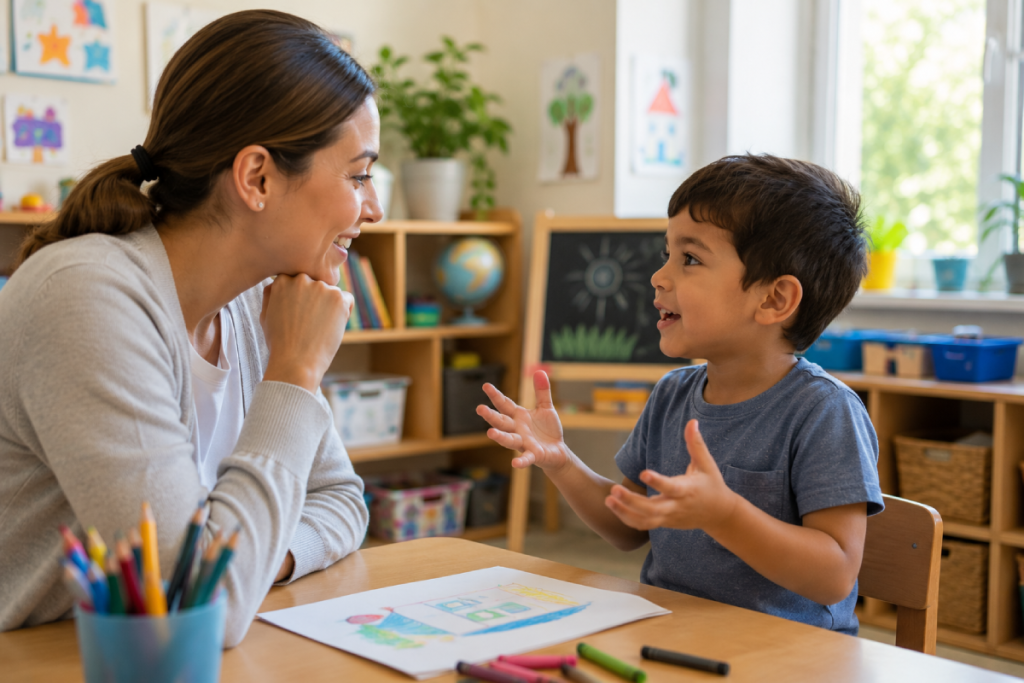
Language is one of the most powerful tools a child will ever develop. From their first babble to full conversations, communication shapes how children connect with others, express emotions, and understand the world around them.
Supporting speech and language development in young children is not just about teaching words; it’s about nurturing confidence, curiosity, and meaningful relationships.
At A Child’s Touch in Thornton, CO, fostering communication is a natural part of everyday learning.
With a focus on dynamic early education in a faith-based setting, children are guided through experiences that reflect core values like Faith, Respect, Honesty, Creative Curiosity, and Fun.
These values create an environment where children feel safe to express themselves, ask questions, and grow into confident communicators.
Below are practical, research-backed strategies you can use to support your child’s communication journey.
Create a Language-Rich Environment to Encourage Everyday Communication
A language-rich environment is one where children are constantly exposed to meaningful words, conversations, and opportunities to communicate. This doesn’t require formal lessons; it happens naturally through everyday interactions.
Start by narrating daily activities. For example, while preparing meals, describe what you’re doing: “I’m cutting the apples into small pieces,” or “Let’s stir the batter together.” These simple moments introduce vocabulary in context, making it easier for children to understand and remember.
Labeling objects around the home or classroom also helps reinforce word recognition. Pointing out everyday items like “chair,” “window,” or “backpack” builds familiarity and encourages children to start using those words independently.
At A Child’s Touch, children benefit from expansive outdoor spaces and nature-rich play areas, which provide endless opportunities for descriptive language. Whether exploring playgrounds or engaging in outdoor learning, children naturally encounter new words tied to real experiences.
Use Conversations and Open-Ended Questions to Build Vocabulary and Confidence
One of the most effective ways to improve communication is through meaningful conversation.
Instead of asking simple yes-or-no questions, try using open-ended prompts that encourage children to think and respond more fully.
For example:
- “What was your favorite part of today?”
- “How did that make you feel?”
- “What do you think will happen next?”
These types of questions invite children to express ideas, describe experiences, and expand their vocabulary. They also show that their thoughts are valued, which builds confidence.
When thinking about how to improve toddler speech, it’s important to focus on quality interactions rather than quantity. Even short conversations during car rides, mealtime, or bedtime can have a big impact.
Active listening is just as important. When a child speaks, give them your full attention, respond thoughtfully, and avoid interrupting. This reinforces positive communication habits and encourages them to keep trying.
Incorporate Reading, Storytelling, and Imaginative Play to Strengthen Language Skills
Books and stories are powerful tools for language development. Reading aloud introduces new vocabulary, sentence structures, and ideas in a way that is engaging and memorable.
Make reading interactive by asking questions about the story, pointing to pictures, and encouraging your child to predict what will happen next. Even allowing them to “tell” the story in their own words helps strengthen comprehension and verbal expression.
Storytelling doesn’t have to come from a book. Encourage children to create their own stories using toys, drawings, or imaginative play. For example, pretend play with dolls or action figures often leads to conversations, role-playing, and storytelling.
Imaginative play is especially valuable because it combines creativity with communication. Children experiment with new words, practice dialogue, and explore different perspectives.
Model Clear Speech and Expand Your Child’s Sentences Naturally
Children learn how to speak by listening to others. Modeling clear, correct speech provides them with a strong example to follow.
If a child says, “Dog run,” you can gently expand it by responding, “Yes, the dog is running fast!” This technique reinforces proper grammar without correcting or discouraging the child.
Avoid pressuring children to repeat words perfectly. Instead, focus on providing positive examples and allowing them to build confidence over time.
The goal is not perfection, but progress, helping children gradually develop more complex language skills.
Consistency is key. The more children hear complete sentences and proper pronunciation, the more naturally they will begin to use them.
Use Songs, Rhymes, and Repetition to Reinforce Early Language Development
Music and repetition play a crucial role in language learning. Songs, nursery rhymes, and rhythmic patterns help children recognize sounds, memorize words, and develop pronunciation skills.
Simple songs with actions, like clapping or hand movements, make learning even more engaging. Repetition helps children internalize language patterns, making it easier for them to recall and use new words.
For example, repeating phrases like “ready, set, go!” or singing familiar songs during daily routines reinforces language in a fun, low-pressure way.
In a childcare setting like A Child’s Touch, music and movement are integrated into the daily routine, creating joyful opportunities for children to practice communication while having fun.
Encourage Social Interaction and Peer Communication Through Play
Children learn a great deal from interacting with others. Playtime provides natural opportunities to practice conversation, negotiation, and cooperation.
Group activities, games, and collaborative play encourage children to express ideas, listen to others, and respond appropriately.
For example, when children work together to build something or play a game, they must communicate to share ideas and solve problems. This type of social communication is just as important as vocabulary development.
Encouraging peer interaction also helps children learn important social cues, such as taking turns, making eye contact, and understanding tone.
Support Language Growth with Visual Cues, Gestures, and Daily Routines
Visual aids and gestures can significantly enhance language learning, especially for younger children or those who are still developing verbal skills.
Pointing, using hand motions, and incorporating visual cues like pictures or charts help children connect words with meaning. For example, showing a picture of a “sun” while saying the word reinforces understanding.
Daily routines also play an important role. Consistent activities like mealtime, cleanup, and bedtime provide predictable opportunities for communication. Children begin to anticipate what comes next and use language to participate.
Using simple, consistent phrases during routines, like “Time to wash hands” or “Let’s clean up”, helps reinforce language through repetition and context.
This combination of visual support and routine is especially helpful to encourage a child to talk, as it reduces pressure and builds confidence.
Conclusion: Building Strong Communicators Starts with Everyday Moments
Helping children develop strong communication skills doesn’t require complicated methods; it starts with simple, intentional interactions every day.
From conversations and storytelling to play and routine, each moment offers an opportunity to support speech and language development in young children.
By creating a nurturing, language-rich environment, children gain the confidence to express themselves and connect with others.
At A Child’s Touch in Thornton, CO, children are supported through a unique blend of faith-based values, creative exploration, and dynamic early education. With a focus on Faith, Respect, Honesty, Creative Curiosity, and Fun, every child is encouraged to grow not just academically, but socially and emotionally as well.
When children feel heard, supported, and inspired, communication becomes second nature, and that’s where lifelong learning truly begins.
Contact us at 720-547-4360 or reach our Facebook page.
Frequently Asked Questions
How can parents improve communication skills in young children?
Parents can improve communication skills in young children by talking frequently, asking open-ended questions, reading together, encouraging imaginative play, and modeling clear speech during everyday activities.
What are the best activities for early language development?
Reading books, storytelling, singing songs, playing interactive games, and engaging in conversations are some of the best activities to support early language development in toddlers and preschoolers.
Why is a language-rich environment important for children?
A language-rich environment helps children hear and practice new vocabulary regularly, making it easier for them to develop stronger communication, listening, and comprehension skills.
How does imaginative play support communication skills?
Imaginative play encourages children to use dialogue, express emotions, create stories, and practice social interaction, all of which strengthen speech and language development.
What role does reading play in speech and language development?
Reading introduces children to new vocabulary, sentence structures, and ideas while improving comprehension, listening, and verbal expression skills.
How can daily routines help encourage a child to talk?
Consistent routines like mealtime, cleanup, and bedtime create natural opportunities for repetition and conversation, helping children feel comfortable using language in familiar situations.


